Harry's story
From the worst year
of my life, to
the best.
I built On the Mend because the programme that got me well didn't exist. This is what actually happened.
I built On the Mend because the programme that got me well didn't exist. This is what actually happened.
I was 22. Training hard, functioning well — on the outside, at least. High energy, high output, always on. Looking back, I was running almost entirely on adrenaline and the need to prove something — to myself, mostly. I didn't know that then. I just thought that was how I was built.
A few weeks after my Covid infection, something shifted. Not immediately. Not dramatically at first. Just a slow dimming of everything that had felt normal.
The fatigue came first. Not tiredness — something heavier, more total. Then the brain fog. Then the crashes. Pushing through a normal day would leave me floored for days afterwards. My body had turned on itself in a way I didn't yet have the language for.
What I didn't know then — what I only understood years later — is that the infection had landed on a nervous system that was already primed. I'd been training hard, pushing hard, functioning at a high level while quietly carrying a lot. The perfectionism, the constant drive, the inability to actually rest even when I stopped moving — that wasn't strength. That was a nervous system running on threat. The infection didn't create the dysregulation. It just tipped a system that was already close to its limit.
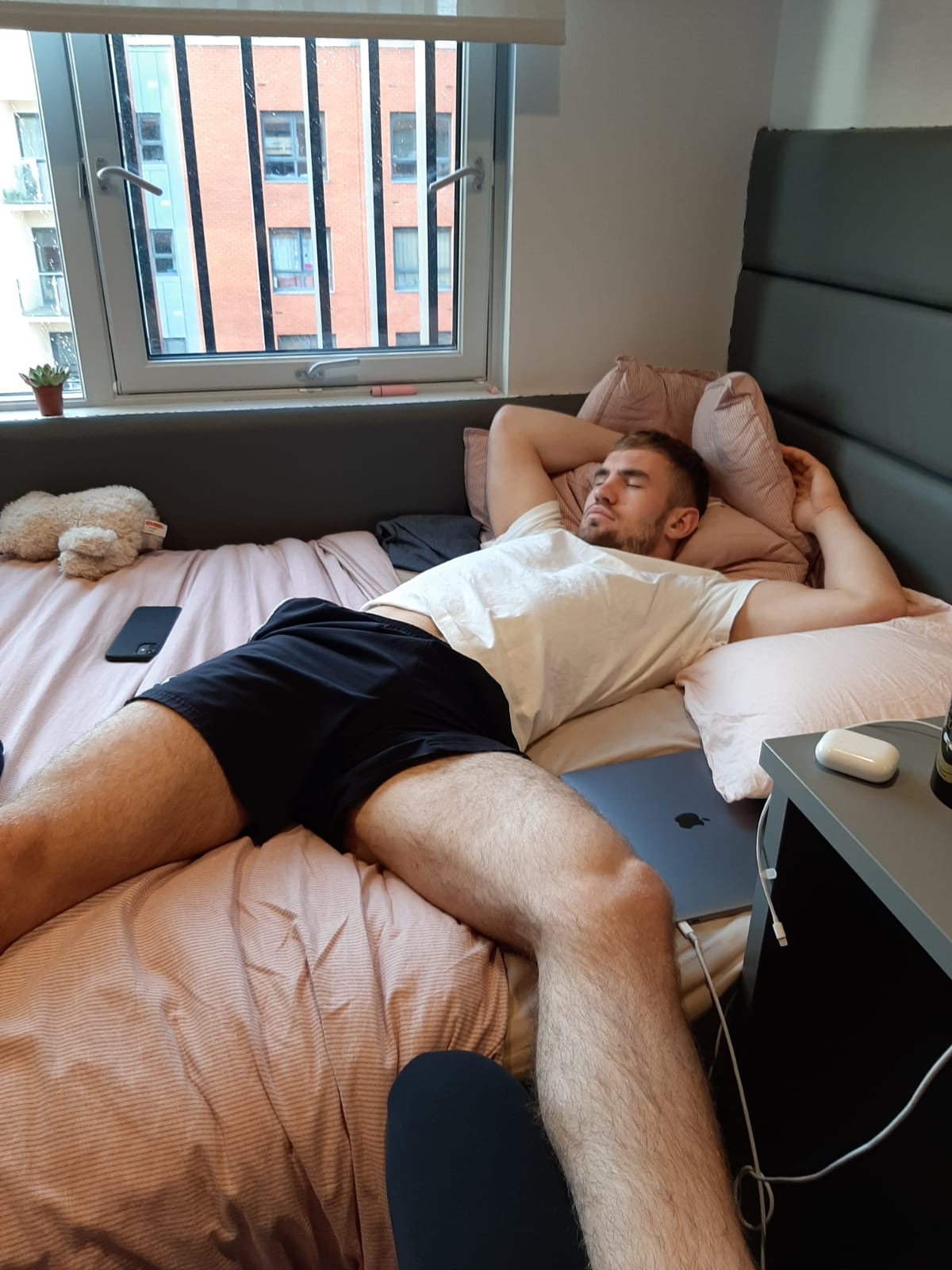
The oscillation started quickly. Some days felt like things were improving. Others confirmed every fear. I became incredibly good at managing around the illness — adjusting, compensating, carrying on. Which, I'd later learn, was part of the problem.
"I oscillated between two states. Resignation — maybe this is just my life now. And frantic hope — this cannot be what was meant for me. Both exhausting in their own way."
The brain fog was what nobody warns you about. It's not just tiredness. It's the feeling that your brain is not yours anymore — that it whirs, grinds, clunks to a halt when you reach for something. Processing a conversation. Following a film. Reading a paragraph twice and still not having it land.
I thought everything was gone. I thought this was it.
I improved. Slowly, inconsistently, with setbacks that felt like they wiped out months of progress in a weekend. I learned about the nervous system. I started to understand that what was happening wasn't just in my lungs or my immune system — it was in the way my whole body had learned to respond to the world.
Brain training helped, at first. It opened my eyes to the constant loop — the way noticing a symptom would produce an anxious response, which would produce more symptoms, which would confirm the fear. I started to break that cycle, a little.
But the methods of simply "swatting" away symptoms didn't fully resonate. If anything, for someone with perfectionist and obsessive tendencies, it became just another obsession. Another thing to optimise. Another way to avoid feeling what was underneath. I was doing what I'd always done — turning the problem into a performance. Trying to recover perfectly. Which, if you understand the nervous system at all, is about as counterproductive as it gets.
The nervous system takes 80% of its messaging from the body — not the mind. A highly cognitive approach to recovery, one that's mostly about interrupting thoughts and visualising, is addressing the smaller part of the system.
The body had to be involved. Not just managed from the outside, but actually worked with, from the inside.
By 2023, I was functioning. Not where I wanted to be, but functioning. And then I made a decision that, looking back, I understand completely — even if it was, as I now say, a silly idea.
I booked a silent meditation retreat. Eight days. No talking, no phone, no distraction. Just you and whatever your mind decides to show you.
What I didn't account for was what happens when you give eight days of uninterrupted space to four years of repressed nervous system material.
Everything surfaced at once. Not metaphorically. Physically.
A piercing pain, deep in my brainstem — as though needles were being stabbed at it. My eyes would vibrate and oscillate, causing a swirling, dizzy sensation any time I looked up. I could not stand or sit upright.
Blood would drain from my face. My hands and feet would go cold. Deep panic would set in. I would collapse every few hours, clutching at this pain through my chest, crying and writhing on the floor.
I had what can only be described as mini-seizures — vibrating on the floor as my partner tried to comfort me.
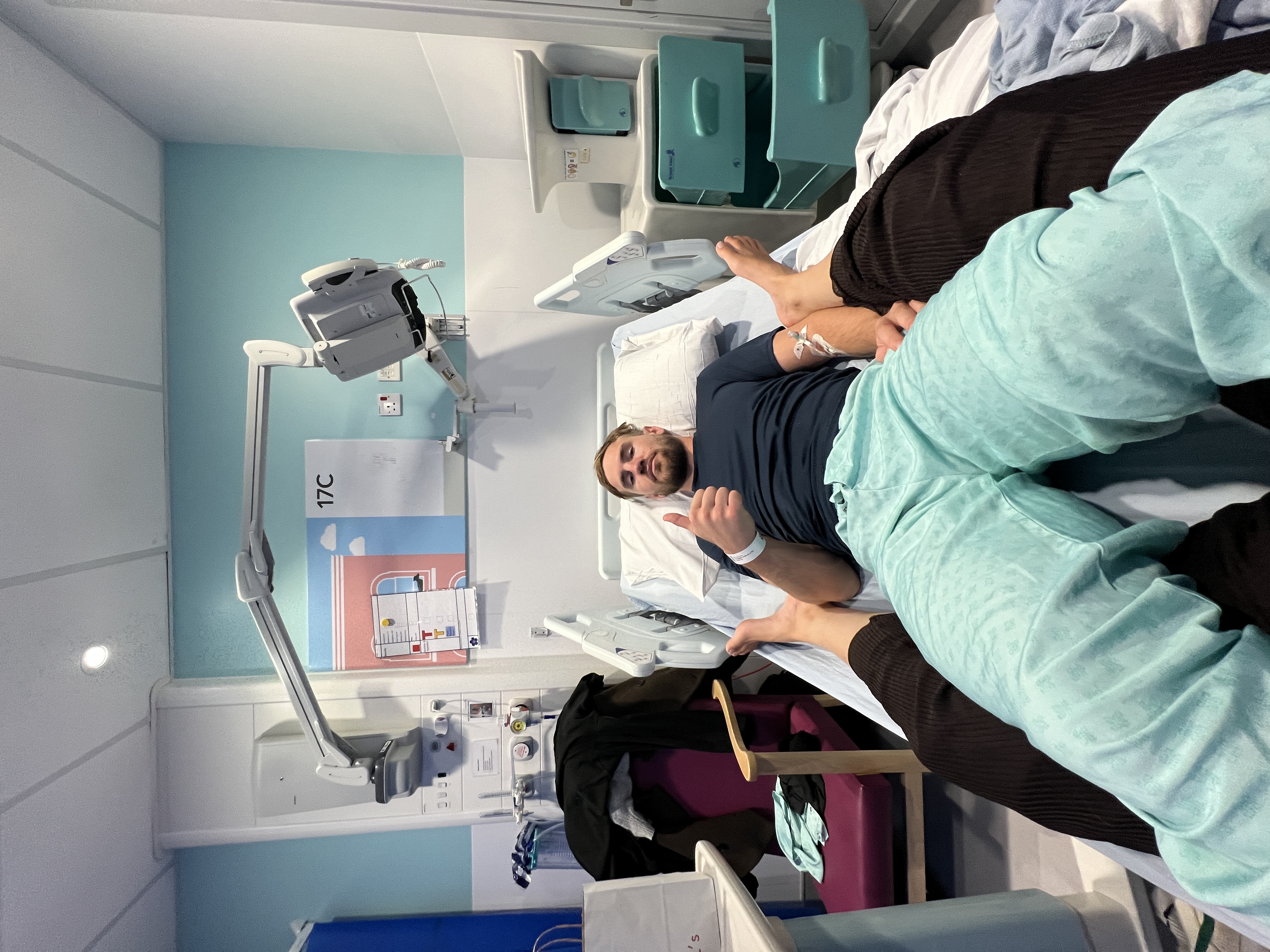
Bay 17C. Every test available. Lumbar puncture. MRI. Multiple EEGs. All clear.
I stared up at the hospital lights with monitors beeping, holding my partner and my sister's hands, tearful that it had come to this. I remember hoping — in my paranoid and foggy state — that they would find encephalitis. At least that would have made sense.
I asked the neurologist: will I ever feel okay again?
She said: "I hope so."
But here's what I now understand, that I didn't then: nothing on those tests being found doesn't mean nothing real was going on.
Chronic stress inflames microglia — the brainstem's immune cells. That's the stabbing, the pressure, the pins. High allostatic load leads to interoception distortion, where the brain misreads internal signals as danger — POTS, dizziness, hypersensitivity to every heartbeat. The swirling behind my eyes, the dissociation, the jolts through my chest: a protective response from a system that had hit its limit and entered shutdown. Real, measurable physiology. No scan needed to confirm it.
I'll be honest. I'm not easily convinced by things that sound a bit "woo woo". Repressed emotions, uncompleted survival mechanisms — even when I was deep in the nervous system rabbit hole, this all sounded a bit far-fetched.
My physics brain doesn't like to believe until I see.
Well. That's exactly what happened.
In an EMDR session, I processed something I'd been carrying for a very long time. The session was intense — my body was shaking, I was almost lashing out, jolting, shouting. And then afterwards, the pressure deep in my brainstem — the pins that had been using it as a pin cushion for months — shifted.
Not metaphorically. Actually, physically shifted.
"When the pressure in my head shifted after EMDR. When the dizziness stopped briefly after crying. When I had 10 hours of complete bliss after emotional release. My physics brain had to accept it."
What I now understand is this: the body keeps trying to finish what you still believe is dangerous to feel. The survival response gets triggered, doesn't complete, gets triggered again. Symptoms are the body's way of surfacing what it needs to process. Every time you resist, fix, analyse, or manage — you confirm to the system that there's something dangerous to resist.
The loop continues.
Somatic EMDR, Hanna Somatics, Somatic Experiencing — these are the tools that let the loop complete. Not by suppressing or reframing, but by actually feeling what the system has been trying to show you.
Little by little, the processing happens. And when it does, the symptoms shift in ways that nothing else had moved them.
I'm sitting in a café typing this. Coffee by my side. The background music washes over me in a way that is uplifting, not overstimulating. I hum with a wry smile.
I hear the sharp hiss of the milk frother. It doesn't jar me. The smell of roasted beans, the chatter of voices, the tapping on my keys. My coffee tastes incredible.
No sudden clunk. No heart flutters. No built-up shoulder tension. A soothing lift as I dive into what I'm writing.
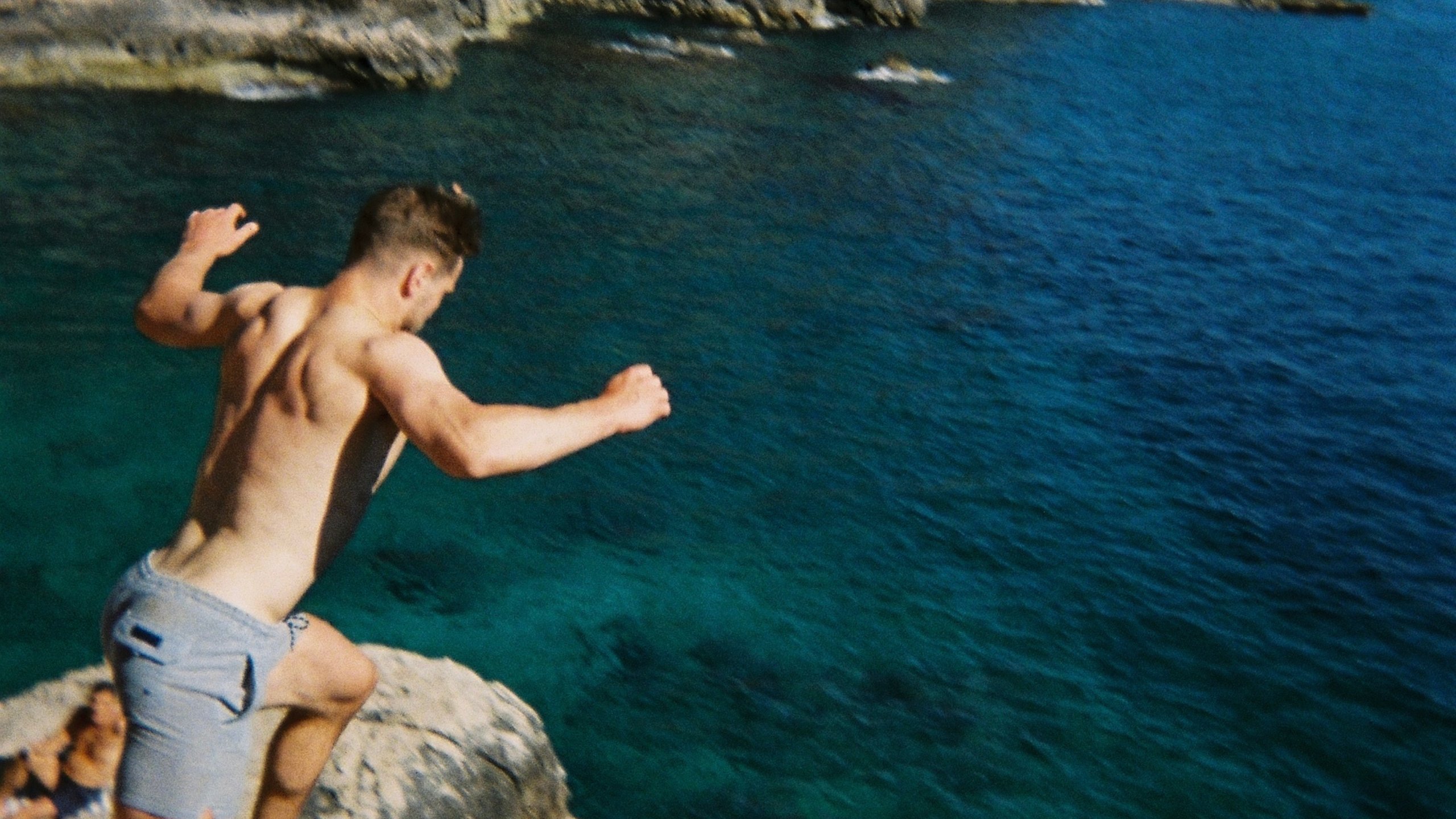
I spent the summer in Sicily and Malta. I'm planning a wedding. Last weekend: Ireland. Next: hiking in Barcelona. I train again — not to run away from something, but toward it. I push not out of need to prove anything, but because I want to.
I'm running On the Mend — sessions weekly, planning a client retreat. Learning the piano. Still can't roll my r's in Italian.
I thought everything was over. I thought, at the worst of it, that I would have to end my life. Not because I had nothing to live for. Because the pain was so great.
And now I live the life of my dreams.
The biggest blessing isn't a return to training or coffee or cliff jumps — though those are wonderful. It's the unravelling of the automatic responses that kept me stuck. The need to perform. To fill every silence. The sudden drop inside when things didn't go perfectly. The constant hum of threat underneath even the good days. I didn't know any of that was there until it was gone.
I never knew what I didn't know.
What I learned from my own recovery is that the nervous system doesn't distinguish between a viral illness, a decade of high-performance pressure, or a childhood that didn't feel safe. The protection response looks the same. The way out looks the same. That's why what I built works across all of these — not because we treat everything, but because we address what's underneath everything.
"So no matter where you are — whether you feel your case is somehow different and uniquely broken — please don't lose hope."
The programme that got me well didn't exist when I needed it. Everything at On the Mend is built from what actually worked — so you have a path, not just a search.
Start your assessment call →